Could Universal Basic Income Work in Malaysia? Unpacking the Debate
My reflections after attending BIEN's Training and Conference in Malaysia 2025

Water that flows freely reaches the last mile… - Dr. Sarath Davala, BIEN Chair -
Imagine receiving a regular, unconditional sum of money from the government – enough to cover your basic needs, no questions asked. Sounds like a dream, or maybe a recipe for disaster? This is the core idea behind Universal Basic Income (UBI), a concept sparking intense debate globally, and recently, right here in Malaysia.
I recently had the chance to dive deep into this topic by attending a conference with experts from the Basic Income Earth Network (BIEN) and various local Malaysian voices. It was a real eye-opener! Based on what I heard and the discussions that unfolded, here are some of the key insights and perspectives that stood out to me about UBI and its potential fit for Malaysia. Please keep in mind, these are my takeaways from the lively debates and presentations, not necessarily the absolute final word on the subject!
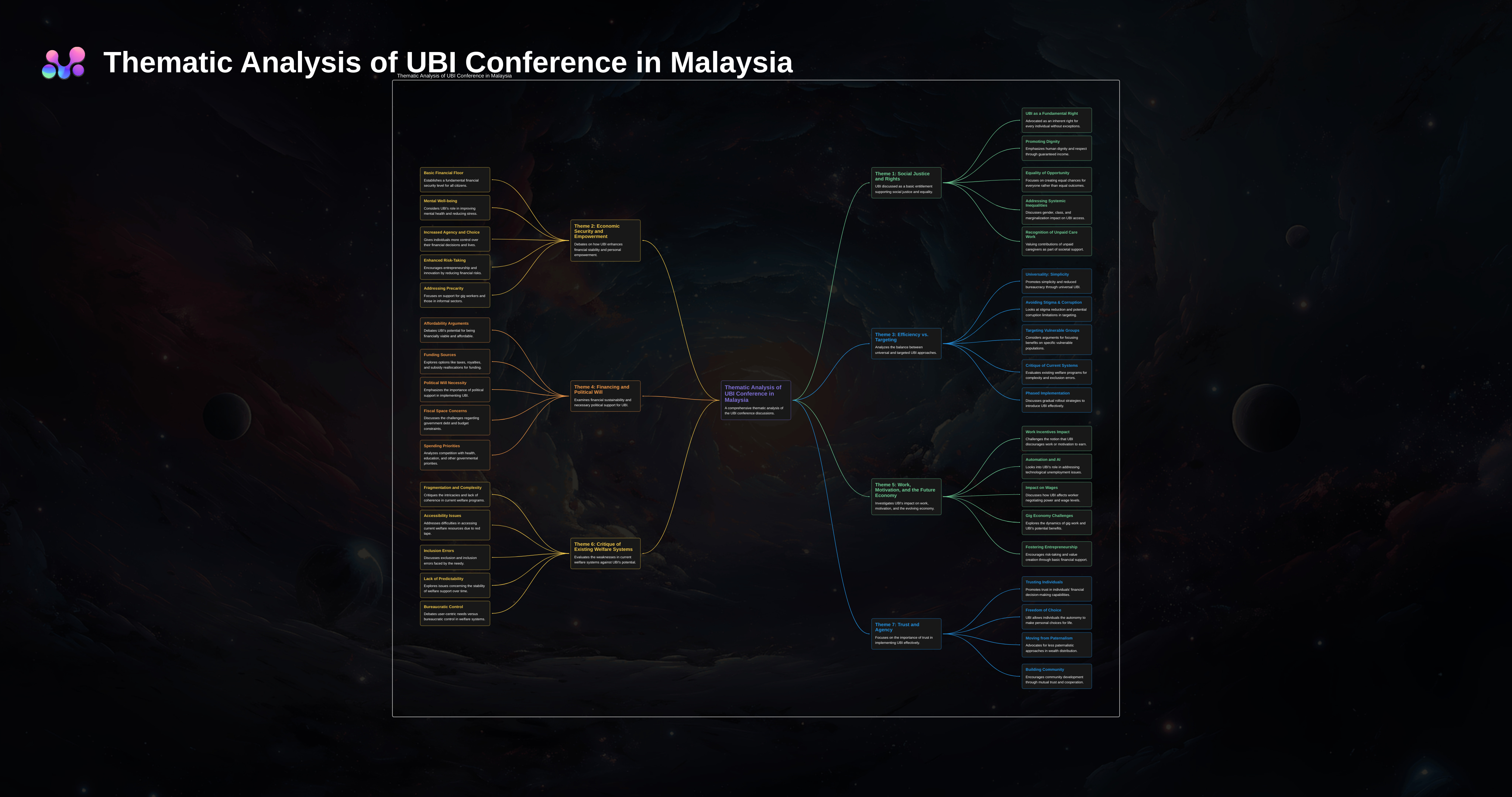
Pssstt… Scroll all the way down to check out the thematic analysis that I made from the conference!
What Exactly is UBI? (Turns Out, It's More Than Just 'Free Money')
One of the first things that became clear is that we should probably ditch the "free money" label. Many speakers at the conference are strictly agaisnt saying this as “Free money” because it is definitely not free, someone (i.e., governments) needs to fund this.
UBI is defined specifically by 5 principles, it is meant to be:
universal (for everyone regardless of age, gender, race etc.)
individual (paid to each person, not families)
periodic (comes regularly, like a salary)
cash-only (or easily usable cash, so you decide how to spend it)
unconditional (no strings attached, no means or needs testing).
The amount of UBI isn't set in stone in this definition – and that seems to be on purpose. What is considered a “basic” income may change from country to country. This also allows countries to start with a modest amount and potentially increase it over time as they can afford it, which I thought was a really practical point.
Why All the Buzz About UBI Right Now?
From what the speakers shared, our world is definitely feeling a bit shaky. More and more people are in precarious jobs, especially in the gig economy, where income is unpredictable and there aren't many safety nets. Plus, with automation and AI advancing so fast, the future of traditional jobs feels uncertain for many. On top of that, our current welfare systems, here and elsewhere, can be really complicated and sometimes miss the very people who need help the most.
This is where, according to the UBI proponents at the conference, UBI could be a game-changer. They suggested it's a powerful way to:
Cut Through Red Tape: The idea is that a universal system could be way simpler to manage than complicated, needs-based programs. Less complexity could mean less bureaucracy and hopefully, fewer opportunities for things to go wrong or for corruption to creep in, making sure support actually gets to people.
Offer a Real Safety Net: A regular, predictable income could provide a much-needed cushion against unexpected tough times – losing a job, getting sick, or facing other emergencies. It seems the thinking is that this stability could make a huge difference in people's lives.
Boost Dignity and Choice: A big theme was that UBI treats everyone with respect, acknowledging everyone's contribution to society. Giving people unconditional cash empowers them to make their own choices about what they need most – whether it's food, paying bills, or investing in something for their future. We even heard about pilot programs where people used UBI to start small businesses or go back to school, suggesting it can actually encourage people to be more proactive, not less.
Give the Economy a Boost: Putting money directly into the hands of people, especially those with less income, tends to mean that money gets spent quickly on essential goods and services in the local community. This spending could help stimulate local businesses and create economic activity.
Okay, But Can Malaysia Actually Afford This? And Where Would the Money Come From?
This was a hot topic, especially given Malaysia's current economic situation, like the national debt and budget deficit. However, several speakers seemed confident that UBI is potentially affordable. They threw around some interesting ideas for funding:
Rethinking Subsidies: One suggestion was to look at existing subsidies, particularly those that seem to benefit wealthier folks more, and reallocate those funds towards UBI.
Broadening How We Tax: Implementing a consumption tax, like GST or VAT, was mentioned as a way to generate significant revenue more broadly across the economy.
Using Our National Resources: Tapping into revenue from things like Petronas's oil and gas earnings was also suggested as a potential dedicated funding source.
The point wasn't just about the total cost, but about how we prioritize spending and who benefits from the current system. Shifting funds from less equitable subsidies towards a universal benefit was seen by some as a fairer approach.
The Roadblocks to Implementation in Malaysia (A Non-Exhaustive List!)
Putting UBI into practice in Malaysia seems to come with its own set of challenges, based on the discussions between the speakers:
Getting Political Buy-in: It seems convincing politicians and navigating the existing political landscape, where targeted aid programs are often popular, is a big hurdle.
Changing Public Perception: The idea of UBI as "free money" or something only for the poor is a common one, and speakers emphasized the need to clearly explain its principles and how it could benefit everyone.
Dealing with the System: The current welfare system in Malaysia and its administration might resist a big change like UBI that would alter their roles.
Making the Payments Work: Ensuring a smooth, secure, and reliable way to get payments to everyone, perhaps using systems like MyKad, is crucial. There were also mentions of making sure the money is truly usable cash, not restricted digital currency.
A pragmatic approach discussed was starting with UBI for specific vulnerable groups first, like older citizens and children. This could be a way to build momentum and show positive results before potentially expanding it later, though some worried this might make it harder to achieve full universality down the line.
It's Not Just About the Money: UBI in the Bigger Picture
This is a really important point stressed by the experts…
UBI isn't a magic fix for everything…
It was often discussed as something that should work together with other essential public services. Things like affordable healthcare, quality education, and good public transport are still super important. UBI gives you financial flexibility, but these services ensure everyone can access fundamental needs without being completely at the mercy of market costs.
Ultimately, the conversations I listened to framed UBI in Malaysia as part of a bigger vision for a more secure and fair society. It's about adapting to a changing world of work, tackling inequality, and giving everyone a basic foundation to build on.
It's definitely a complex topic with lots of different angles – economic, political, and even philosophical about what we value as a society. But based on the insights shared at the conference, exploring ideas like UBI seems like a really important conversation for Malaysia to be having right now.