
Everyday Impact
Are You Measuring What Really Matters?

Are You Measuring What Really Matters?
Here’s how to tell if you’re tracking activities, outputs, or outcomes leading towards impact
If you’ve ever written an impact report and felt unsure what to say, you're not alone.
Most businesses talk about what they did.
Fewer talk about what changed.
And even fewer ask who that change actually mattered to.
But here’s the truth:
Real impact is not what you do. It’s what improves because of it.
Here’s how to spot the difference and how to manage for what matters.
1. Know what you did or do(Activity)
This is your effort. The work you put in. The programs, services, or actions you deliver.
“We ran ten training sessions.”
“We launched a new loan product.”
That’s important and it’s only the start.
2. Track what you produced (Output)
This is what came out of the work. It’s usually a number or fact.
“40 people trained.”
“RM50,000 disbursed.”
“200 solar panels installed.”
These show scale, but still don’t tell us what changed in someone’s life.
3. Focus on what changed (Outcome)
Now you’re getting to the point.
Outcomes are the meaningful differences your work made, defined by the people affected.
Try this:
“Most participants told us they feel more confident setting prices and no longer rely on short-term loans.”
That’s a real change.
That’s what you want to manage and improve.
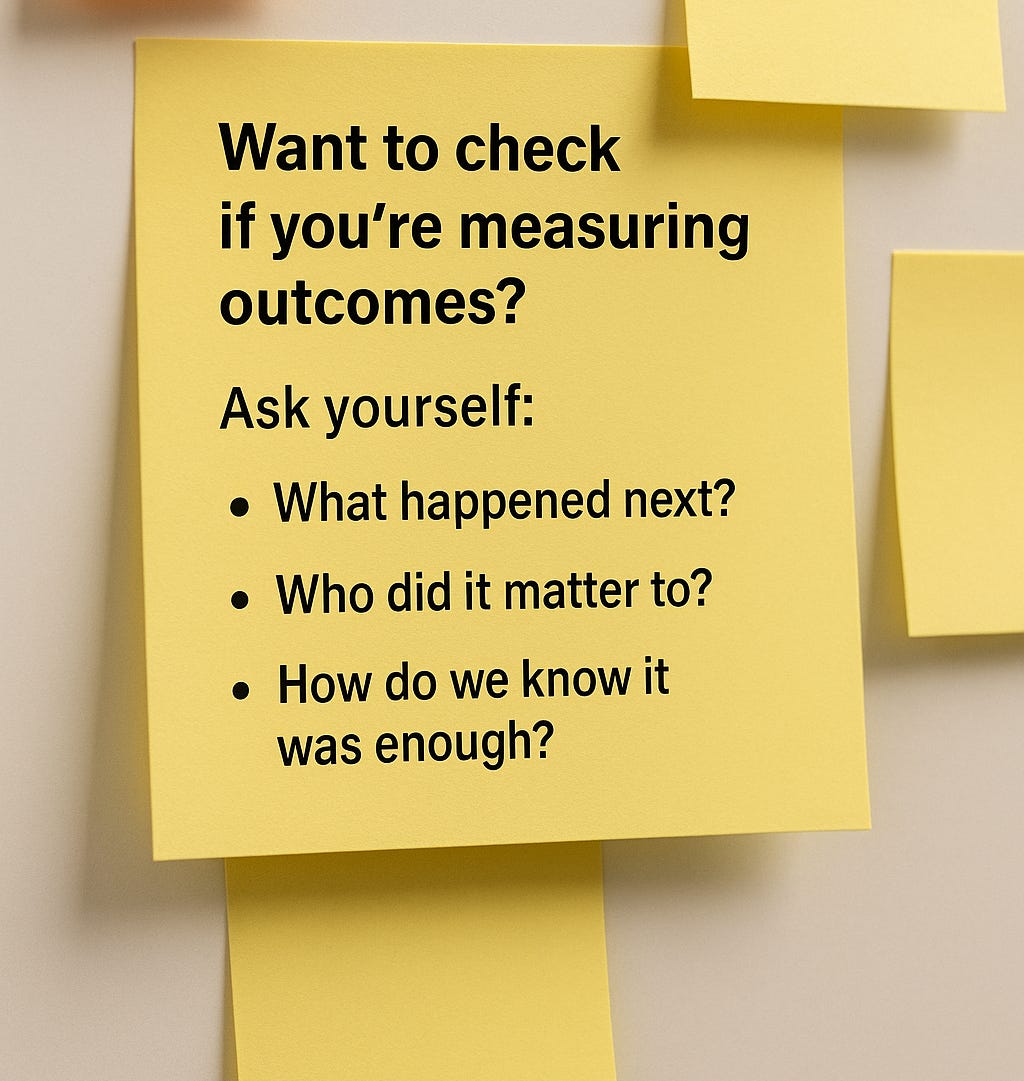
Want to check if you’re measuring outcomes?
Ask yourself:
What happened next?
Who did it matter to?
How do we know it was enough?
If you can answer those, you’re moving to the next step of tracking outcome.
Here is one example of an outcome statement
We trained 40 small business owners. Three months later, 60 percent reported gaining new clients. Of those, several shared that this helped them increase income and reduce their reliance on short-term loans, giving them more financial control at home