
From Report to Resonance
Communicating Your Corporate SROI Story Effectively

A meticulously conducted Social Return on Investment (SROI) analysis, even one that is assured, only realizes its full potential when its findings are communicated effectively. For corporations, translating the often complex data and methodologies of an SROI report into a compelling and accessible narrative is crucial for engaging stakeholders, building trust, and demonstrating genuine commitment to social value. This final blog in our series explores best practices for transforming technical SROI reports into resonant stories that capture attention and drive understanding.
A. Beyond the Technicalities: The Art of Storytelling in Social Impact
While SROI reports are inherently data-rich, their true power to connect with audiences lies in the stories they can tell. Numbers and ratios provide evidence, but narratives provide meaning and emotional connection by telling authentic stories of change. They humanize data by sharing real-life examples and personal journeys of beneficiaries, making the impact tangible and relatable. For instance, the SoulAce Women's Literacy Program SROI report opens with Rekha's personal story, grounding the subsequent analysis in a human context.
Humanize the Data: The most effective way to communicate social impact is to frame statistics and monetized values within the context of real human experiences. Instead of merely stating that a program improved wellbeing by a certain percentage or generated a specific financial proxy value, share a story about an individual whose life was tangibly changed by the initiative. For example, the SoulAce report on a Women's Literacy Program effectively began by sharing the personal journey of Rekha, a beneficiary whose confidence and independence were transformed by the program, immediately grounding the subsequent data in a relatable human context.
Focus on the "Why": Clearly articulate the social or environmental challenge that the corporate initiative aimed to address. Explain why the corporation chose to get involved and what its overarching goals were. This provides essential context and demonstrates strategic intent beyond mere philanthropy.
Show, Don't Just Tell: Utilize real-life examples, anecdotes, and detailed case studies drawn from the SROI analysis to illustrate the impact. Instead of saying "the project improved skills," describe the specific skills learned and how beneficiaries are now using them.
Craft a Narrative Structure: Guide the reader through a clear and engaging journey. This typically involves setting the context (the problem and the initiative), detailing the actions taken (the program activities), presenting the results (key outcomes and the SROI findings), and looking towards the future (learnings and next steps).
Effective SROI communication skillfully translates complex methodologies and monetized values into relatable human impacts. This transformation is key because it makes the corporation's contributions more tangible, understandable, and emotionally resonant for a diverse range of stakeholders, from employees and customers to investors and community members. Corporations that master the art of SROI storytelling can build deeper brand loyalty and foster greater trust. Stakeholders are far more likely to connect with, remember, and be influenced by authentic narratives of positive change than by abstract ratios or dense technical reports alone. In a competitive marketplace, the ability to compellingly and credibly communicate positive social impact, backed by rigorous SROI data, can become a significant competitive differentiator.
B. Visualizing Value: Making SROI Data Accessible and Engaging
Visual elements are indispensable tools for making the often complex data within SROI reports accessible, understandable, and engaging. Well-designed visuals can distill intricate information into clear, digestible formats, helping audiences quickly grasp key findings and trends.
Infographics: These are highly effective for presenting a snapshot of the SROI analysis, illustrating the lifecycle of impacts, comparing different types of value created, or showcasing key statistics and outcomes in an easily shareable format.
Charts and Graphs: Various chart types can be employed to visualize SROI data effectively :
Bar charts with target lines or extra bars: Useful for showing progress towards specific SROI targets or comparing actual social value generated against projected value.
Bullet charts: Can clearly display performance against a target within defined qualitative ranges (e.g., below expectation, meets expectation, exceeds expectation).
Stacked bar charts: Can illustrate how different outcomes contribute to the overall social value, or how value is distributed among various stakeholder groups.
Dot plots or Lollipop charts: Effective for comparing multiple outcomes or stakeholder impacts without the clutter of traditional bar charts, especially when there are many categories.
Progress bars: Simple yet effective for showing the percentage of a social value target achieved.
Line charts: Can track the accumulation of social value over time or trends in specific outcomes.
Waterfall charts: Useful for showing how various positive and negative impacts contribute to the net social value.
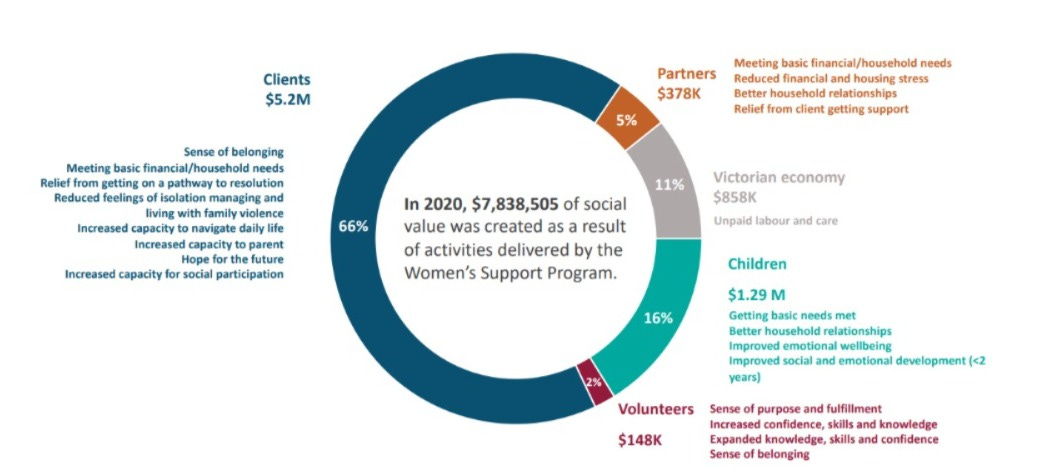
Source:Think Impact .
Interactive Elements: For digital communication channels like blogs or online reports, incorporating interactive elements such as clickable tabs that reveal more detailed information, or animated graphs that allow users to explore data points, can significantly enhance user engagement and understanding.
Before-and-After Scenarios: Visualizing the situation before an intervention and the changes experienced afterward can make the impact very relatable and easy to comprehend.
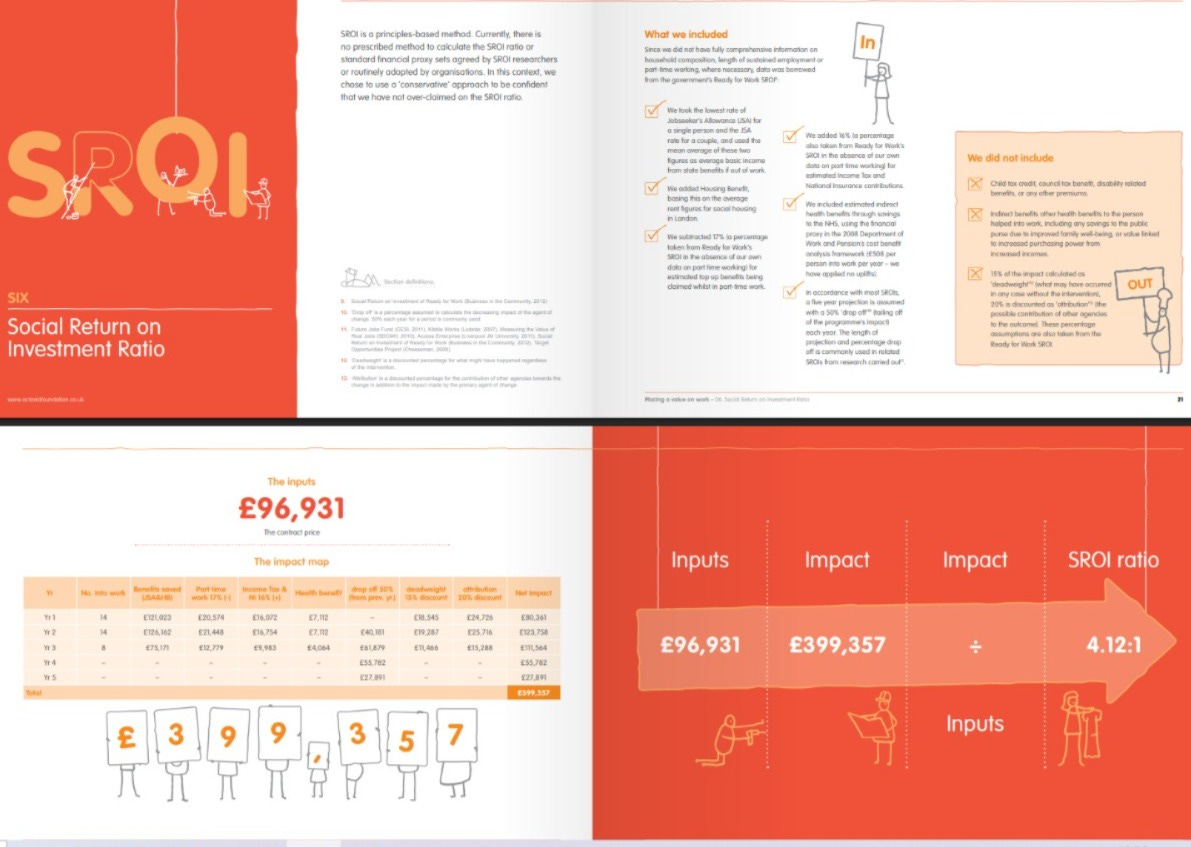
Clarity through Design: Regardless of the type of visual used, clear labeling, appropriate use of color contrast (especially to differentiate actual performance from targets or to highlight key data), and uncluttered design are essential for readability and accurate interpretation.
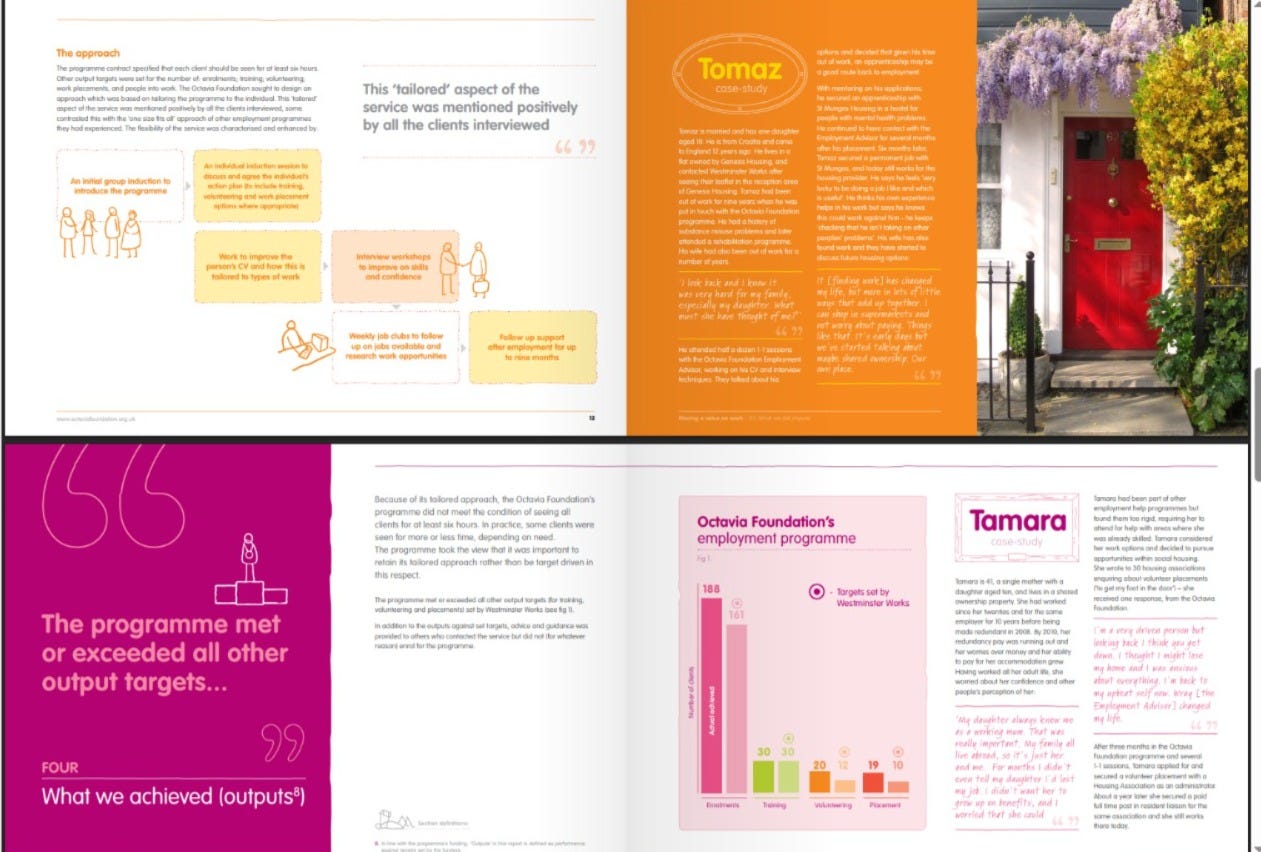
Clarity through design Source: Octavia SROI report
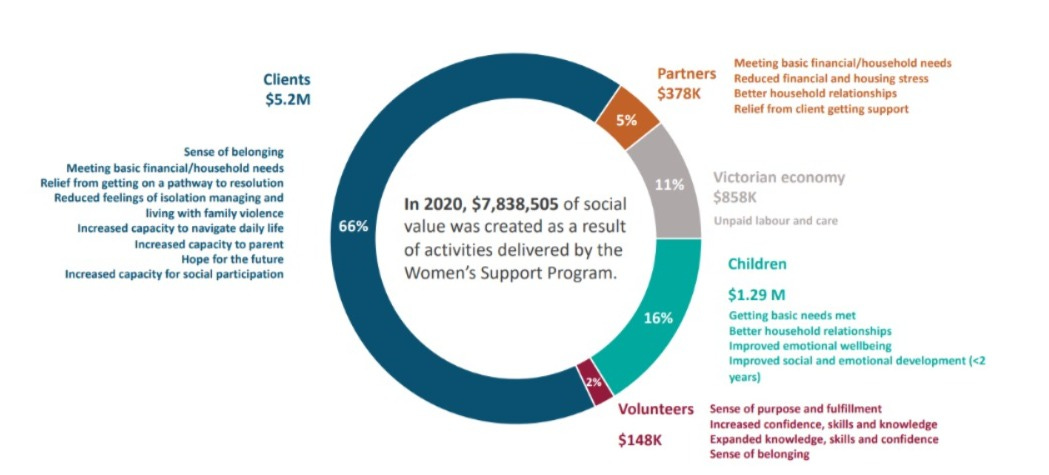
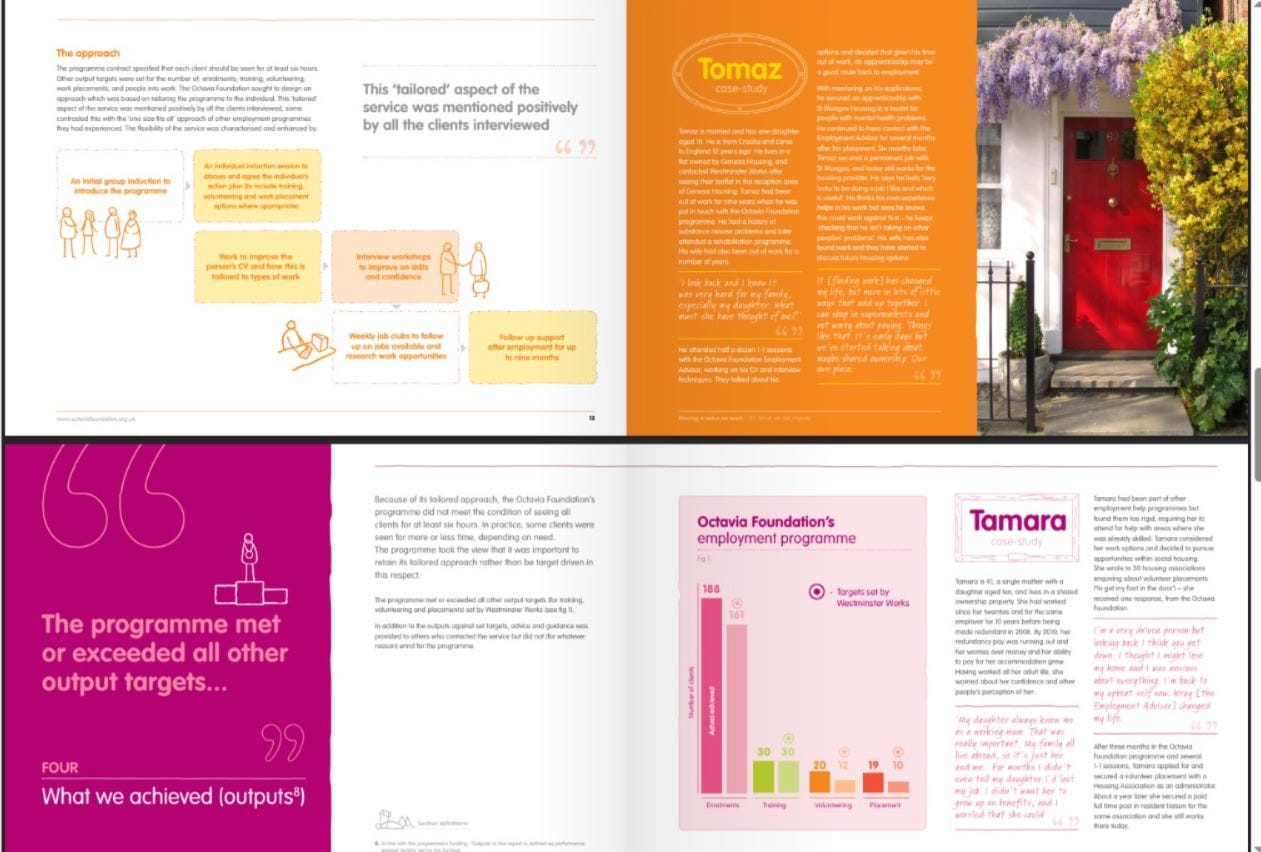
Visualizing SROI data effectively transcends mere aesthetics; it is a crucial component of democratizing the understanding of social impact. By translating numbers and complex relationships into intuitive visual forms, corporations enable non-expert stakeholders to grasp the significance of the findings and appreciate the value created. As SROI becomes more commonplace in corporate reporting, the sophistication of its visualization is also likely to increase. We may see a greater adoption of techniques from financial reporting, data journalism, and interactive data design to create even more dynamic, persuasive, and insightful impact narratives, further elevating the communication of social value.
C. Crafting Compelling Narratives: Best Practices for Blog Content from SROI Reports
Translating a comprehensive, often technical, SROI report into a series of engaging and accessible blog posts requires a thoughtful content strategy. Blogs offer a platform to reach a wider audience and to explore different facets of the SROI findings in a more digestible format.
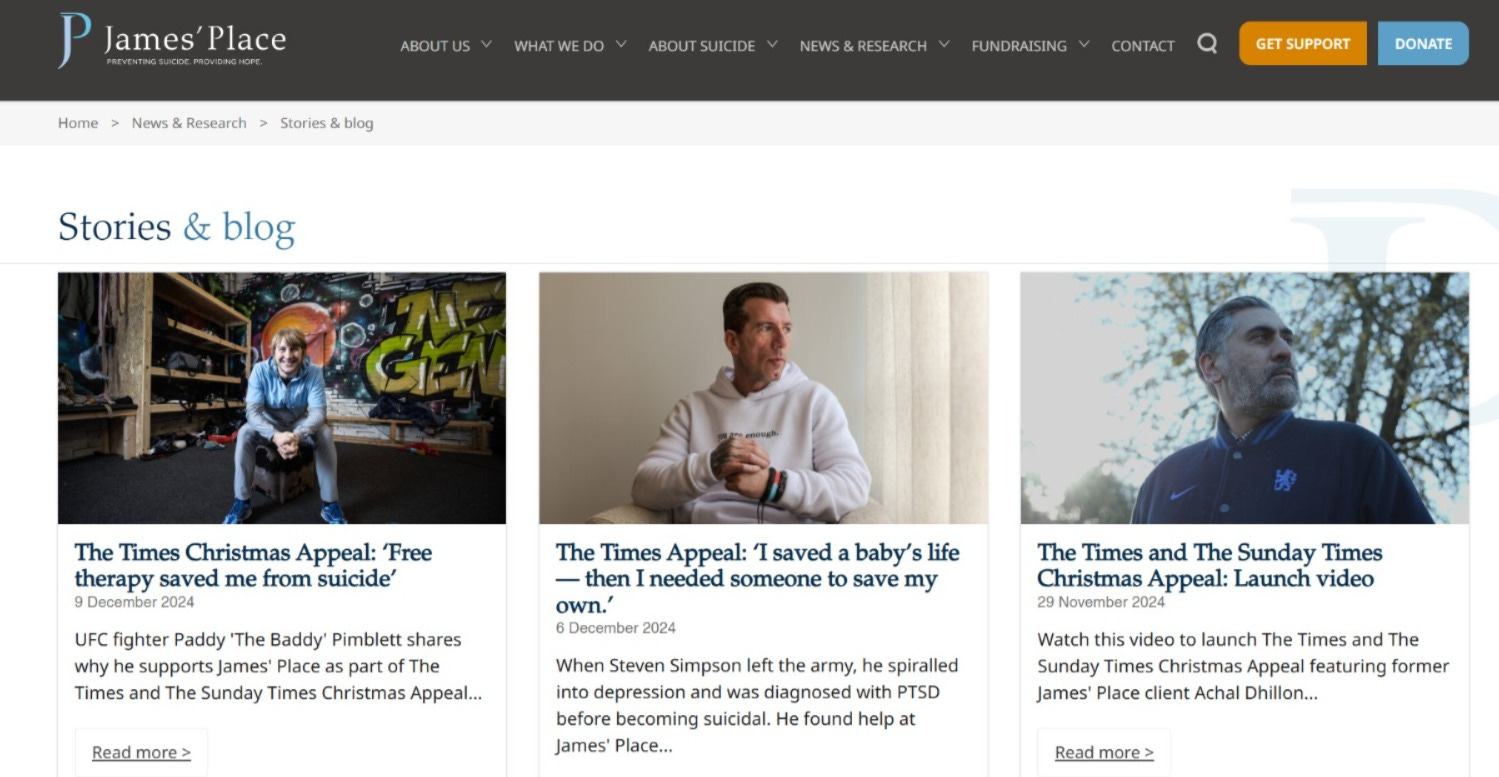
Example: James’ Place Official Blog – Male Suicide Stories
This blog shares personal stories of men who have experienced suicidal crises and received support from James’ Place. It humanizes the impact behind the SROI findings and is a great example of translating technical reports into engaging, accessible content
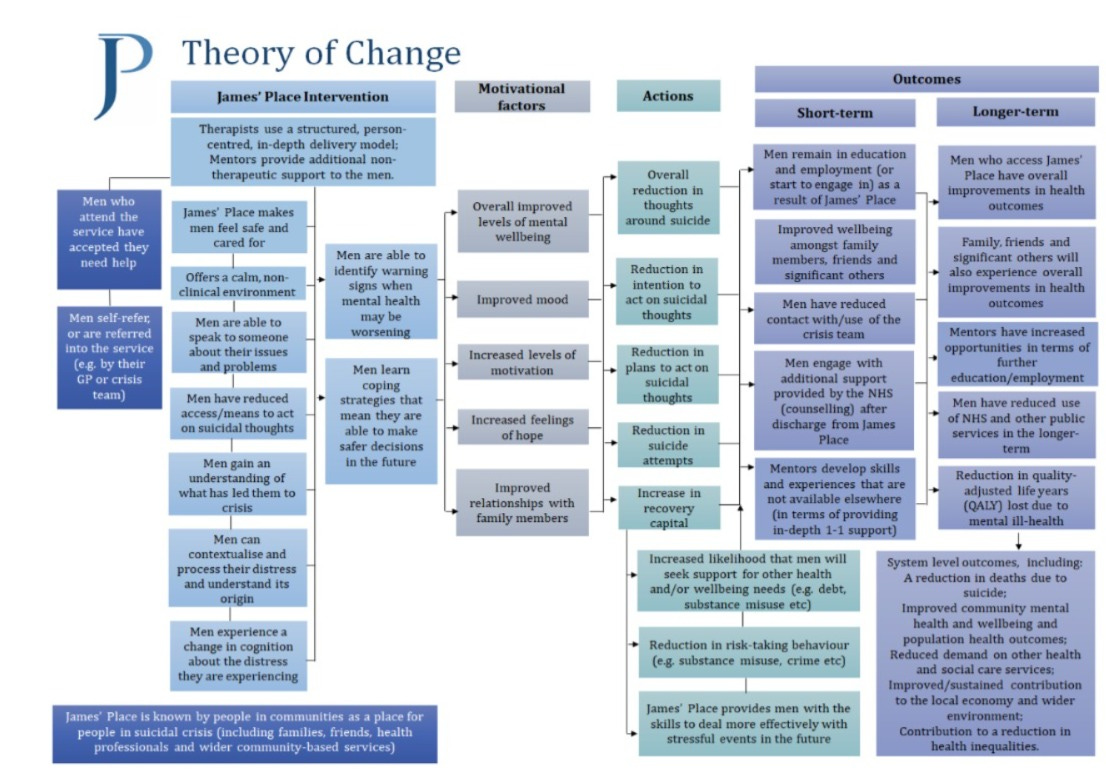
James’ Place Year 2 SROI Report (PDF)
Though this is the full technical report, it contains clear summaries, case examples, and accessible language that can be adapted into blog posts.
Spotlight on Innovations and Impactful Projects: Dedicate individual blog posts or distinct sections within posts to highlight specific initiatives or innovative approaches that were part_ENREF_101 of the SROI analysis. This allows for a deeper exploration of particular success stories. This very blog series, for instance, uses this approach by deep-diving into specific corporate case studies.
Employ a Clear Case Study Structure: When presenting specific project impacts, follow a logical structure:
Background: Introduce the social or environmental challenge being addressed and the context of the initiative.
Action: Detail the activities undertaken by the corporation and its partners.
Results: Share the quantifiable outcomes and the SROI findings, emphasizing the changes experienced by stakeholders.
Showcase Customer/Beneficiary Success Stories: Weave in narratives that focus on how the corporation's efforts directly enabled positive change for individuals or communities. These personal stories make the impact tangible and relatable.
Decode Myths and Address Challenges Transparently: Use the blog format to discuss some of the complexities or limitations of SROI itself, or specific challenges encountered during the project. This transparency can build credibility.
Include Clear Calls to Action (Where Appropriate): Depending on the context, a blog post might encourage readers to learn more, engage with the initiative, or support the cause in some way.
End with Engaging Questions: Conclude blog posts with open-ended questions to prompt reader comments, foster discussion, and encourage a two-way dialogue about social value.
Highlight Key Achievements, Targets, and Progress: Use the blog to clearly communicate the main achievements highlighted by the SROI data, track progress against social value targets, and share learnings.
Maintain Consistent Branding: Ensure that the visual presentation and tone of the blog posts align with the corporation's overall brand identity to reinforce recognition and trust.
Transforming a dense SROI report into a series of engaging blog posts necessitates a content strategy that thoughtfully breaks down complex information into digestible, themed narratives. Each piece should be tailored to capture different stakeholder interests or explore various angles of the impact story. A monolithic summary of an SROI report is generally less effective than a multi-faceted approach that tells the story through different lenses. By blogging about their SROI findings, corporations can significantly extend the life and reach of their impact assessments. This fosters ongoing dialogue, shares valuable learnings both internally and externally, and ultimately maximizes the "return" on the SROI analysis itself by ensuring its insights continue to inform and inspire long after the formal report is published.
D. Authenticity Matters: Avoiding "Value Washing" and Ensuring Transparent Communication
In the communication of Social Return on Investment, authenticity and transparency are paramount. As stakeholders become more discerning about social impact claims, any attempt to misrepresent or overstate value can severely damage a corporation's reputation. Conversely, a commitment to honest and clear communication builds significant trust.
Acknowledge Limitations and Assumptions: Be open and upfront about the inherent limitations of the SROI methodology, the specific assumptions made during the analysis (e.g., regarding financial proxies, deadweight, attribution, duration of impact), and the precise scope of any assurance obtained. This transparency does not weaken the findings; rather, it strengthens their credibility.
Example 1. PTTEP Social Return on Investment Guideline
Source: PTTEP Sustainability Report Link to PDF
Authenticity & Transparency Highlights:
Emphasizes use of standardized, globally consistent metrics (IRIS standards) to ensure transparency and comparability across projects.
Encourages clear documentation of financial proxies, data sources, and assumptions.
Highlights challenges in monetizing qualitative outcomes and advocates transparent reporting of these limitations.
Promotes honest communication about what can and cannot be monetized to avoid exaggeration.
Assurance: Aligns with international best practices for transparent and authentic SROI reporting.
Report Negative Outcomes: A hallmark of a robust and honest SROI analysis is the inclusion of any unintended negative consequences or outcomes. The Tekfen Women Farmers' Loan SROI, for example, reported instances of financial stress among some beneficiaries , and the iGA Beekeeping SROI noted feelings of sadness or disappointment for some trainees. Including such findings demonstrates a commitment to a balanced assessment and builds trust.
Do Not Over-Claim or Misuse Ratios: Strictly adhere to SROI Principle 5 (Do Not Over-Claim). Clearly articulate what the SROI ratio represents and, equally importantly, what it does not. Avoid using SROI ratios for simplistic, out-of-context comparisons between vastly different projects or organizations, as this is a common misuse of the metric.
Clarity on Assurance: Be precise about the level and scope of any external assurance obtained for the SROI report. If the assurance is principles-based and does not verify underlying data (as is common with SVI/SVUK assurance ), this should be clearly stated. Avoid using potentially misleading terminology like "limited assured SROI report" if it could create ambiguity about the depth of verification.
Example 2. Offploy Social Value SROI Report (May 2024)
Source: Social Value UK Assured Report Link to PDF
Authenticity & Transparency Highlights:
The report was independently reviewed and certified to meet Social Value International’s assurance standards.
It clearly states the scope of the assurance, noting which aspects (e.g., stakeholder engagement or raw data verification) were outside the assurance scope, thus avoiding overstating certainty.
The methodology, assumptions, and limitations are openly disclosed, demonstrating a commitment to honest communication.
Assurance: Certified by Social Value International and Social Value UK, reinforcing credibility.
Provide Access to Full Information: Whenever summarizing SROI findings in blogs or other communications, provide a clear link or reference to the full, detailed SROI report. This allows stakeholders who seek more in-depth information to access it, further demonstrating transparency.
Focus on Continuous Improvement and Learning: Frame the SROI analysis and its findings as part of an ongoing journey of learning and improving social impact, rather than presenting it solely as a marketing figure or a final declaration of success. This positions the corporation as a reflective and adaptive organization committed to maximizing its positive contributions.
True authenticity in SROI communication is rooted in a corporate culture that genuinely embraces impact measurement not just for public relations, but for sincere learning, accountability, and continuous improvement. This deep-seated commitment is reflected in the willingness to transparently report both successes and shortcomings, including negative outcomes, and to openly acknowledge methodological assumptions and limitations. As stakeholders, including investors, consumers, and regulators, become increasingly sophisticated in their understanding and scrutiny of social impact claims, corporations that engage in "value washing" or misrepresent their SROI findings face escalating reputational risks. Conversely, those organizations that consistently demonstrate rigor, transparency, and a genuine commitment to creating and accurately reporting social value can build substantial brand equity and foster deep, lasting trust with their stakeholders. In this context, robust and authentic SROI communication becomes a key element not only of corporate responsibility but also of long-term value protection and creation